
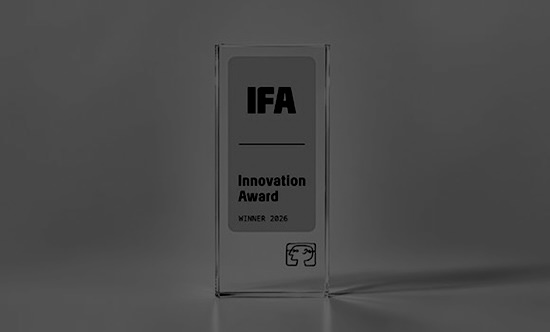

PART 1 of a three part series on the IFA Innovation Awards
Winning an IFA Innovation Award does not guarantee commercial success.
It can, however, become one of the strongest credibility signals a consumer technology brand earns before the exhibition begins.
What Are the IFA Innovation Awards?
The IFA Innovation Awards recognise consumer technology products that demonstrate outstanding innovation, engineering, design, functionality, and user experience. Applications are reviewed ahead of IFA Berlin, with the winners showcased during the exhibition, which runs from 4–8 September 2026.
Unlike many awards programmes, judges are often making decisions without ever using the product. That makes the quality of your application almost as important as the product it represents.
IFA Innovation Awards At A Glance
Prior to preparing your application, it’s worth understanding the details of this program. The table below summarises the key elements of the 2026 IFA Innovation Awards, including eligibility dates, entry fees, what winners receive, and the new recognition opportunities introduced this year.
IFA Innovation Awards At A Glance
| IFA Innovation Awards 2026 | Details |
|---|---|
| Programme | The IFA Innovation Awards return for 2026 with 16 award categories and expanded recognition for winning products. |
| Award Categories | Includes Smart Home, Mobility, Sustainability, Beauty Tech & Wellbeing, IFA Next & Emerging Technologies, and 11 additional consumer technology categories. |
| What’s New in 2026 | All category winners will be recognized during a dedicated live awards programme on the Dream Stage in front of international media, journalists, and industry attendees. |
| What Winners Receive | • Official IFA Innovation Award certification• Physical IFA Innovation Award trophy for booth display • Winner announcements across IFA’s official channels• Opportunity to be featured in the Innovation Awards Zone • Licensing rights to use the official IFA Innovation Award winner badge in marketing |
| Entry Deadline | 7 August 2026 |
| Winners Announced | 21 August 2026 |
| Exhibitor Entry Fee | €799 |
| Non-Exhibitor Entry Fee | €1,199 |
The winners are recognized and celebrated during a live awards ceremony at IFA, with the winning products showcased throughout the exhibition.
Why the IFA Innovation Awards Matter
IFA has long been one of the most influential events on the global consumer technology calendar, particularly for brands expanding into Europe. Last year the show attracted more than 220,000 visitors from 140 countries, and generated more than 301 billion global media impressions.
The Innovation Awards add another layer of visibility before the exhibition even begins.
Winning products receive recognition across IFA’s marketing ecosystem while benefiting from the credibility that comes with independent evaluation. By the time many journalists, retailers, distributors, and customers first encounter your product in Berlin, it may already have been recognised by respected industry experts.
That credibility continues long after the exhibition closes.
Retail buyers notice award winners. Journalists often add them to their shortlist before arriving in Berlin. Distributors look for independent validation. Customers encounter the award long before they ever hold the product in their hands.
That is why the submission deserves far more attention than it usually receives.
The judges can only evaluate what is in front of them.
The good news is that the IFA Innovation Awards programme tells applicants exactly what it wants. The challenge is presenting that information in a way that makes the innovation immediately obvious.
A strong submission explains the customer problem, demonstrates the technical achievement, and provides enough evidence for judges who will never physically experience the product.
Why It Matters For Visibility
Recognition from the IFA Innovation Awards extends well beyond the exhibition floor. Winning products receive additional visibility through IFA’s marketing channels, media activity, award showcases, and digital promotion. More importantly, the award tells retailers, journalists, distributors, and consumers that an independent panel has already assessed the product’s quality and innovation. An independent third-party approval goes a long way in reducing buyer uncertainty, particularly when evaluating unfamiliar products or emerging technologies.
In an increasingly crowded consumer technology market, that credibility becomes a commercial advantage long before your booth opens.
How the IFA Innovation Award Judges Evaluate Your Product
Before writing a single word of your application, it helps to understand what the judges expect in terms of requirements.
The IFA Innovation Awards are not searching for the product with the longest specification sheet or the most marketing hype. They’re looking for products that combine meaningful innovation with excellent execution.
Every submission is assessed against a series of core evaluation criteria. Understanding these should shape every section of your application.
Judging Criteria At A Glance
| Evaluation Criterion | What the Judges Evaluate | What This Means for Your Submission |
|---|---|---|
| Innovation & Originality | Products that meaningfully advance their category through genuinely new concepts, significant improvements to existing solutions, or a fresh, disruptive approach to a familiar problem. | Clearly explain what is new, why it matters, and how your innovation differs from existing alternatives. |
| Technical Sophistication & Quality | Evidence of engineering excellence, including build quality, technical specifications, reliability, and proof that the product is a robust, functional solution rather than a conceptual prototype. | Support every technical claim with specifications, testing, certifications, patents, or other objective evidence. |
| User Experience & Design | How thoughtfully the product has been designed for its intended audience, including usability, interface, physical interaction, ergonomics, and overall design quality. | Demonstrate how the design improves the customer experience rather than simply looking attractive. |
| Real-world Impact & Viability | Whether the product solves a genuine customer problem, has a credible use case, and demonstrates realistic commercial potential and long-term value. | Explain who the product is for, the problem it solves, and why it has a viable path to market success. |
| Fair & Transparent Scoring | Scores are normalized across judging panels to ensure every submission is evaluated consistently and fairly, regardless of category or panel. | A clear, well-organized, evidence-based application allows judges to score your product accurately against the published criteria. |
Judging Criteria Details
Every application is assessed against five core judging criteria that measure both the quality of the product and the strength of the submission. The following sections explain what judges are evaluating and what that means for your application.
Innovation and Originality
Innovation sits at the heart of every successful submission.
The judges are looking for products that genuinely move their category forward. That could mean introducing an entirely new concept, significantly improving an existing solution, or taking a disruptive approach to solving a familiar problem.
The strongest applications explain exactly what has changed, why it matters, and why the improvement is meaningful for customers rather than simply different for the sake of being different.
If your product incorporates proprietary technology, patents, novel engineering, or a unique technical approach, explain how these contribute to the innovation rather than simply listing them.
Innovation alone, however, is not enough. Before a product can even be evaluated, it must meet the programme’s eligibility requirements. Products must:
- Be a consumer technology product or home appliance.
- Be commercially launching between February 1, 2026 and April 30, 2027.
- Be submitted by an authorized representative of the company.
Meeting these requirements ensures your product can proceed to judging, where its innovation and execution are assessed against the published evaluation criteria.
Takeaway: Innovation is measured by meaningful advancement, not by the number of new features, and eligibility requirements must be satisfied before judges can assess your product.
Technical Sophistication and Quality
Because judges do not physically test the products, your submission must demonstrate engineering excellence through evidence.
They are looking for confidence that the technology is robust, well engineered, and ready for real-world use. Technical specifications, manufacturing quality, performance data, certifications, testing results, and reliability all help establish credibility.
Marketing claims alone rarely convince experienced judges. Measurable evidence does.
Think of your application as replacing the hands-on experience they cannot have.
Takeaway: Every technical claim should be supported by evidence.
User Experience and Design
Great technology should be intuitive as well as innovative.
Judges evaluate how thoughtfully a product has been designed for its intended audience. That includes the user interface, physical interaction, ergonomics, accessibility, aesthetics, and the overall experience of using the product.
A visually impressive product that creates friction during setup or daily use is unlikely to score as highly as one that balances design with usability.
The best submissions explain not only how the product looks, but how its design improves the customer experience.
Takeaway: Design should make the technology easier and more enjoyable to use.
Real-world Impact and Viability
Innovation has little value if it cannot solve a genuine problem.
Judges look for evidence that the product addresses a clear customer need, has a credible use case, and demonstrates realistic commercial potential.
Explain who the product is for, what problem it solves, why existing solutions fall short, and why your approach is likely to succeed in the market.
Supporting evidence such as customer validation, pilot programmes, industry adoption, or early commercial success can strengthen this section considerably.
Takeaway: Show why your innovation matters in the real world, not just in the laboratory.
Fair and Transparent Scoring
Every submission is assessed by an independent panel of technology journalists and industry experts using a structured scoring process.
To ensure consistency across all award categories, scores are normalized across judging panels. This helps account for natural differences in individual scoring and ensures every product is evaluated on equal terms.
Applicants cannot influence this process, but they can make the judges’ job easier.
A clear, well-structured submission supported by relevant evidence allows judges to evaluate the product confidently against the published criteria.
Takeaway: The scoring process is designed to reward strong evidence presented clearly and consistently.
Perfecting Your Entry
Even the most innovative product can lose momentum if the submission fails to communicate its value.
The judges can only evaluate what you show them. A complete, well-structured, and evidence-based application gives them the confidence to assess your product fairly against the published criteria.
This would work well as a scannable table in the post.
| Submission Best Practice | What the Judges Expect | Why It Matters |
|---|---|---|
| The 60-Second Rule | Treat your opening summary like an elevator pitch. Clearly explain the problem your product solves and why it is innovative within the first minute of reading. | Judges review many applications. A strong opening immediately establishes why your product deserves attention. |
| Back It Up with Evidence | Support every claim with technical specifications, testing data, certifications, performance metrics, patents, or other objective evidence. | Judges cannot test products in person, so your documentation must bridge the gap between concept and reality. |
| Be Accessible | Write for someone who has never heard of your company or product. Avoid internal jargon, unexplained acronyms, and overly technical language. | Clear communication allows judges to focus on the innovation instead of trying to interpret the application. |
| Prioritize Visual Proof | Include high-quality product images, demonstrations, interface screenshots, and ideally a short video showing the product in action. | A two-minute demonstration often communicates more effectively than pages of written explanation. |
| Submit Everything in English | Complete the application and supporting materials in English wherever possible. Supporting documentation in other languages is not recommended. | Eliminates unnecessary barriers during evaluation and ensures judges can fully assess your submission. |
Best practices for preparing an IFA Innovation Awards submission. A clear, evidence-based application helps judges evaluate innovation fairly and consistently.
Start Strong
Your opening summary should work like an elevator pitch.
Within the first minute of reading, judges should understand what your product does, the problem it solves, and why it represents a meaningful innovation. If your core message isn’t immediately clear, the rest of the application becomes much harder to follow.
Takeaway: If you can’t explain your innovation clearly in a few sentences, refine the message before writing the rest of the application.
Support Every Claim with Evidence
A strong first impression is only the beginning.
Because judges cannot physically interact with your product, your submission must provide the evidence that bridges the gap between concept and reality.
Technical specifications, engineering documentation, certifications, testing data, performance metrics, customer validation, patents, and measurable results all strengthen your case. The more objective proof you provide, the easier it becomes for judges to assess your innovation.
Takeaway: Every important claim should be supported by evidence rather than marketing language.
Write for Someone Who Has Never Heard of You
Never assume the judges know your company, product, or market.
Avoid internal terminology, unexplained acronyms, and technical jargon that requires prior knowledge. Write for an intelligent reader encountering your product for the first time.
Clear, accessible language allows the innovation to speak for itself.
Takeaway: Simplicity improves understanding without diminishing technical credibility.
Let Visuals Do Some of the Work
Images, demonstrations, and video often communicate innovation more effectively than pages of written explanation.
A short video showing the product solving a real-world problem can provide context that specifications alone cannot. High-quality product photography, interface screenshots, diagrams, and demonstrations help judges visualize the customer experience and understand how the technology works.
In many cases, a two-minute product demonstration is more persuasive than several pages of technical description.
Takeaway: Strong visual evidence complements your written submission and helps bring the product to life.
Submit Everything in English
All application materials should be submitted in English.
While supporting documentation in other languages may be accepted in some circumstances, it is not recommended. Judges should be able to review every part of the submission without requiring translation or interpretation.
Takeaway: A consistent English-language submission reduces friction and ensures nothing is lost in translation.
What This Means for Your Submission
These judging criteria reinforce a simple point.
Successful submissions rarely rely on ambitious marketing copy.
The strongest applications explain the customer problem clearly, demonstrate genuine innovation, support every important claim with evidence, and organise that information in a way that allows judges to evaluate the product quickly and confidently.
Think like a judge, not a marketer.
Bottom Line
- Judges reward evidence over marketing language.
- Customer impact matters more than feature count.
- The quality of the submission directly influences how innovation is perceived.
Frequently asked questions
Got questions about IFA Berlin?